Ddolbeng Le Chemin
Place les cartes dans l'ordre et guide un ami
Gratuit · Sans publicité
De quoi il s'agit
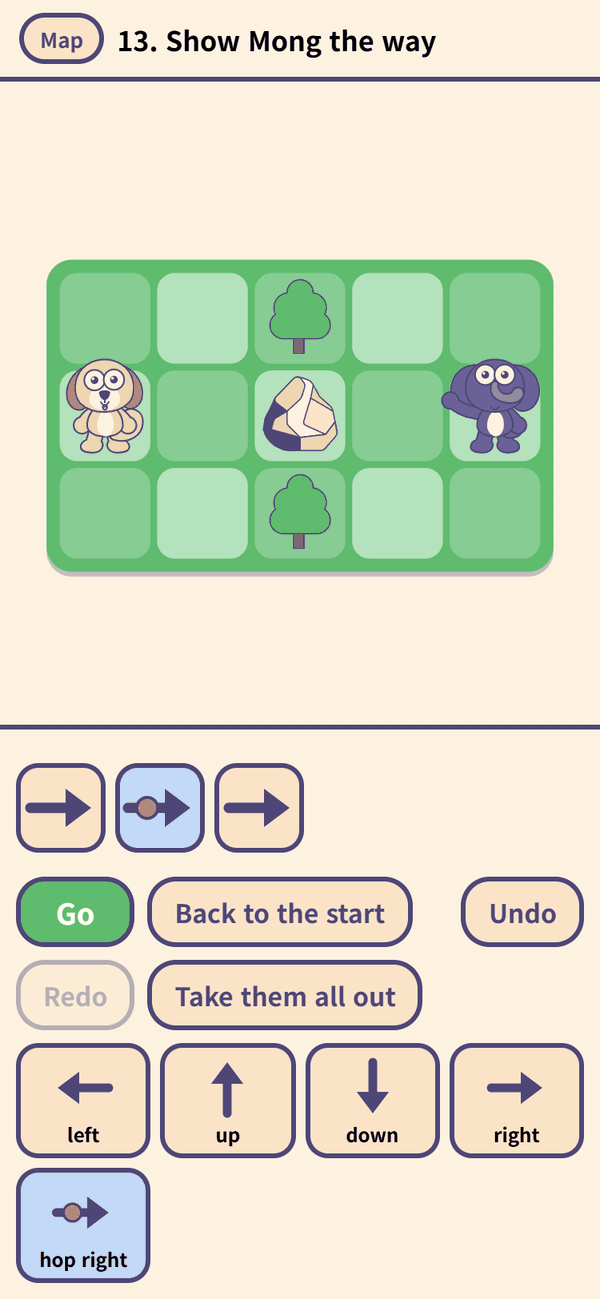
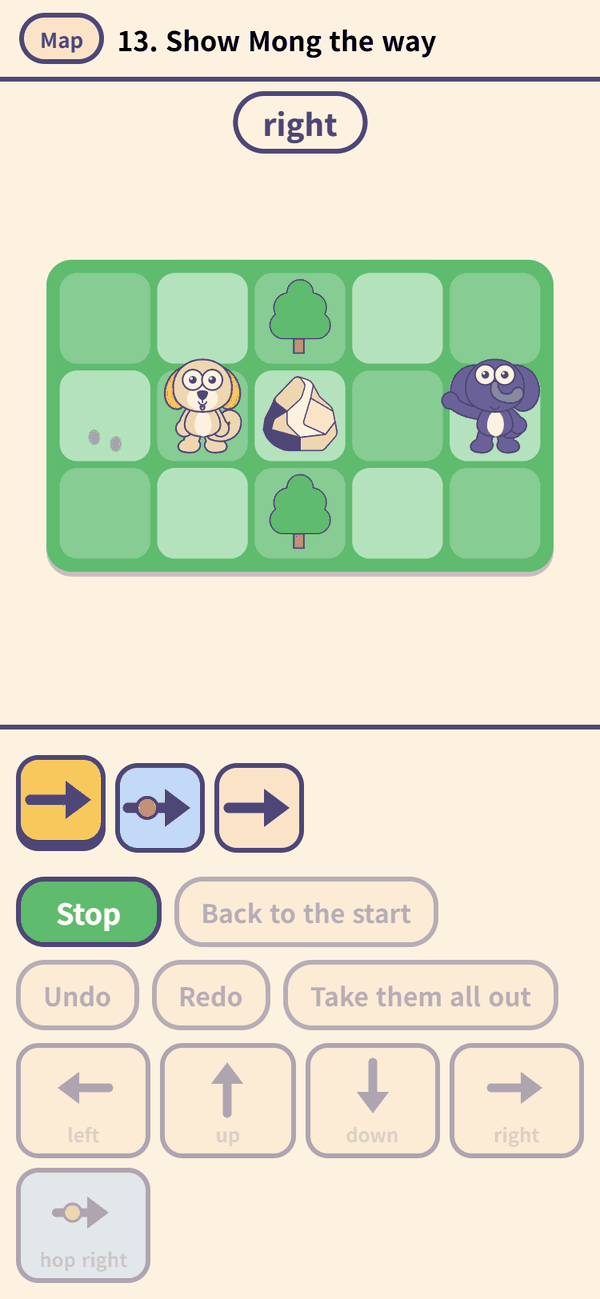
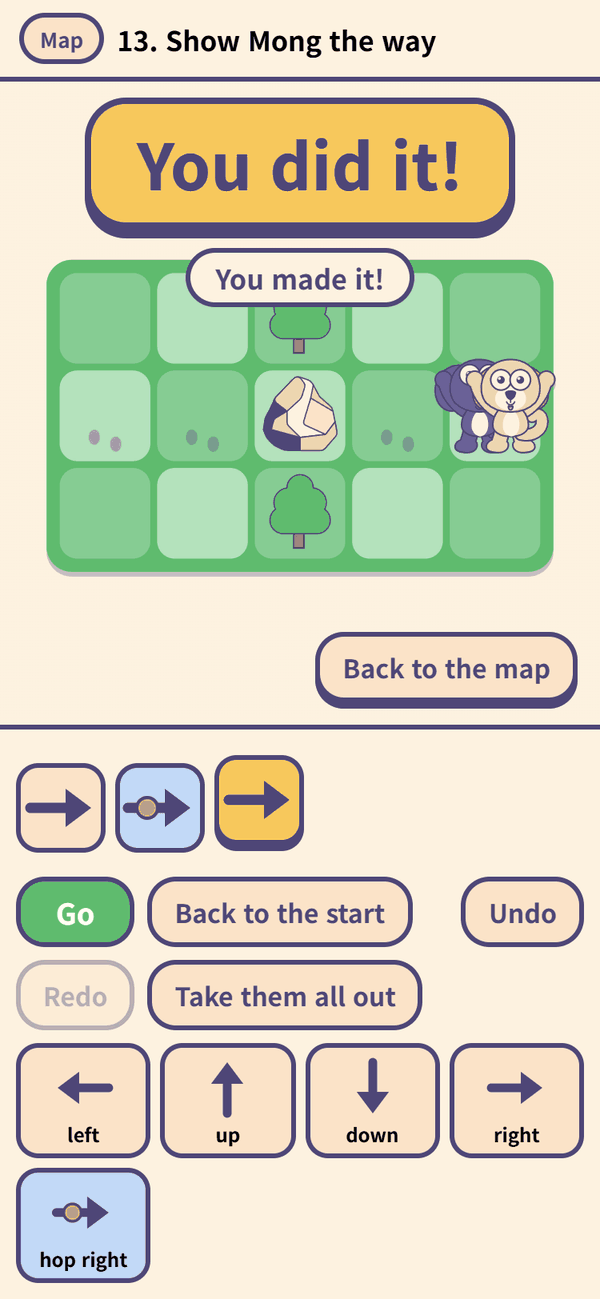
Un enfant place des cartes-flèches dans un ordre et appuie sur départ, et un ami les exécute une case par temps. La carte en cours s'allume, si bien que l'enfant peut relire son propre plan carte après carte.
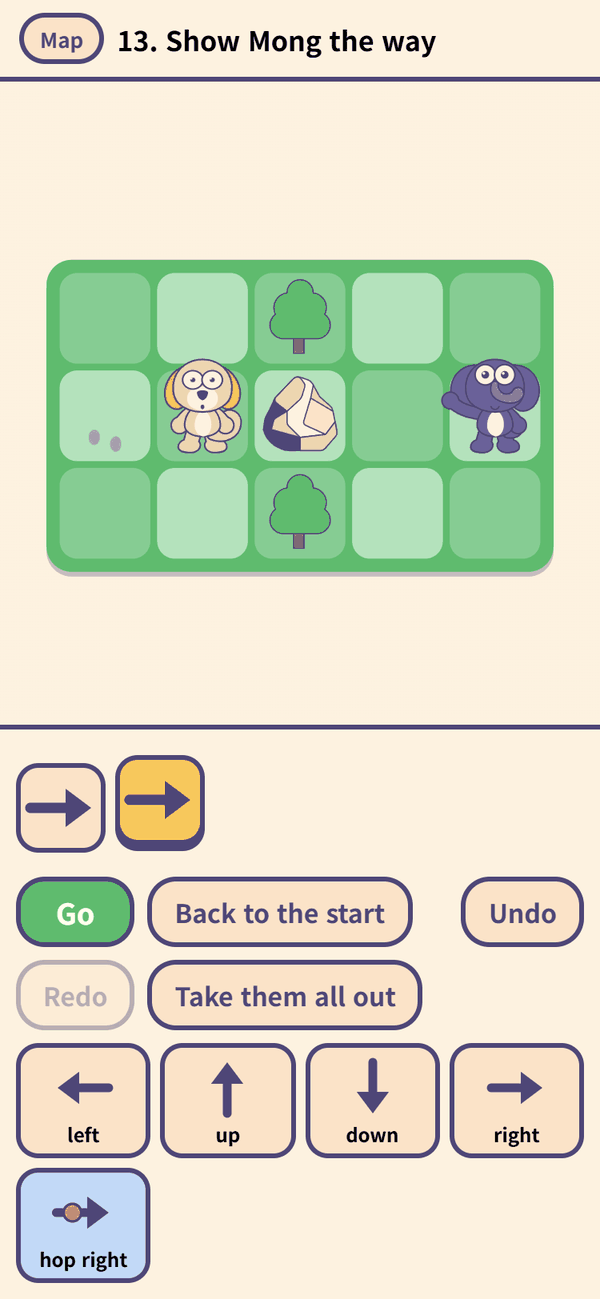
S'il rentre dans un arbre, l'ami sursaute, l'arbre bouge, et il s'arrête. C'est tout : aucun son d'erreur, aucune croix rouge, aucune fenêtre pour recommencer. Les cartes sont toujours là ; on en change une et on repart.
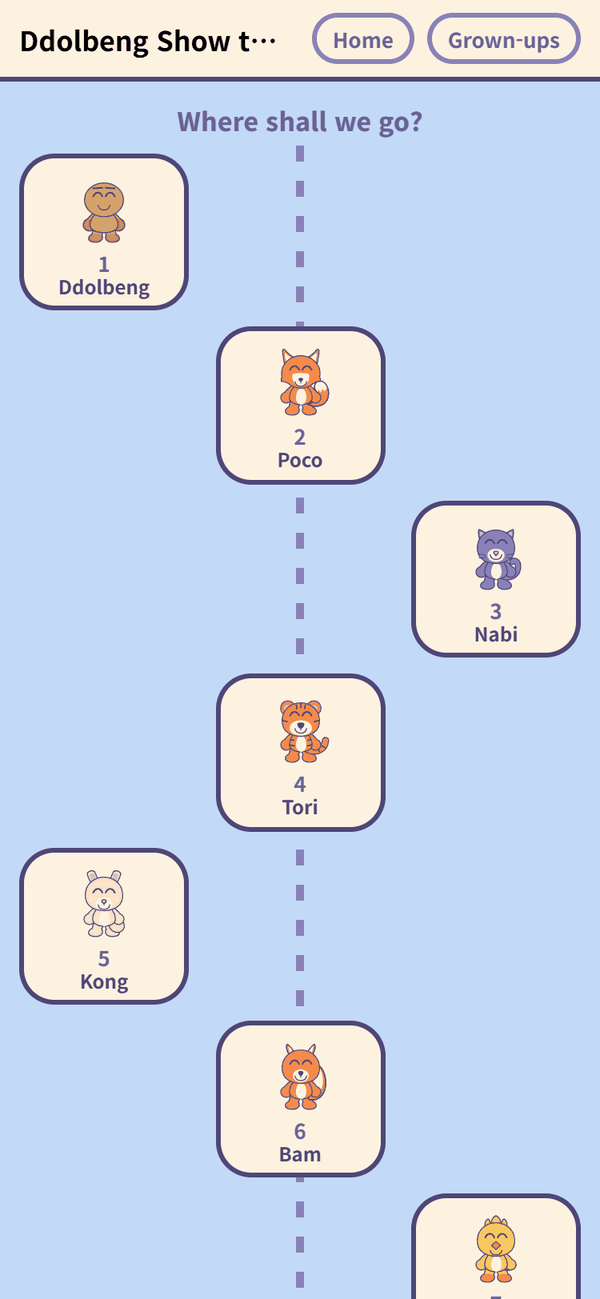
Il y a trente et un plateaux et tous sont ouverts dès le début. Un enfant qui bloque au 4 peut faire le 9 et revenir. Le dernier n'a nulle part où arriver. Il est juste là pour se promener.
Ce qui vient avant la programmation par blocs, ce n'est pas la syntaxe, c'est la séquence. Un enfant capable de mettre quatre flèches dans l'ordre et de dire ce qui va se passer est prêt pour les blocs illustrés.
See all sixteen plays in one video
Nos engagements
- Aucun chronomètre
- Aucune publicité
- Aucun achat
- Aucune notification
- Aucune série
- Rien n'est collecté
Comment ça marche